The Best Edge Angle for Push Cutting Vegetables Without Fragile Edges
You grab a tomato. You push the blade forward. Instead of a clean slice, you get a cracked skin and a squished mess. Sound familiar? Here’s the thing—most home cooks are running edge angles that fight the cut instead of helping it. Push cutting vegetables isn't about brute force. It’s about letting the knife do the work. But if your geometry is wrong, you’re basically trying to slice with a wedge.
The Angle Sweet Spot Nobody Talks About
Everyone screams about "razor-sharp" edges. Sharp is good. But fragile? That’s where the trouble starts. For push cutting vegetables, you want an angle that slices without rolling or chipping. Think somewhere between 15 and 20 degrees per side. Lean closer to 18, and you hit a weird, beautiful middle ground. Sharp enough to glide through a bell pepper. Tough enough that you aren't babying the edge every time you hit a cutting board. Too steep, and you're hacking. Too shallow, and you're sharpening your knife every other day.
Why Acute Angles Hate Hard Veggies
Carrots. Butternut squash. Those little bastards are harder than they look. A super thin edge—like 12 degrees—will absolutely demolish a shallot. It’s glorious. Until you hit a raw carrot. Then you hear it. That microscopic *crunch* that means your edge just took damage. Geometry is a trade-off. Always. The thinner the blade, the less metal is backing up the edge. You want precision for push cutting vegetables, but you need enough meat behind the edge to survive real food.
The Board Matters More Than You Think
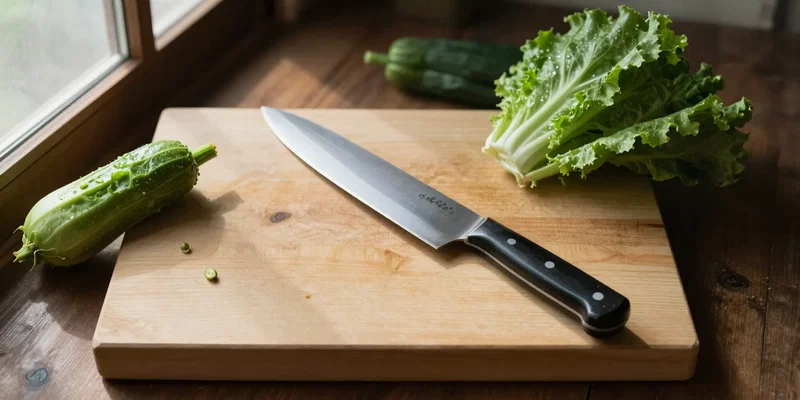
People obsess over steel. Over sharpening stones. Over angles. Then they cut on glass or bamboo and wonder why their edges explode. A hard board acts like an anvil. It smashes the edge into itself. Pair a fragile edge with a glass cutting board, and you’re basically running a durability experiment. End-grain wood is the move. It gives. It lets the edge sink in and pull out without trauma. Your best edge angle means nothing if the landing zone is concrete.
How to Test Your Geometry Fast
Grab a cucumber. A soft one. Push cut straight down. No rocking. No sawing. If the blade grabs and wedges, your angle is probably too thick. If it slices but you feel a slight hesitation, you’re in the zone. If it flies through like nothing but the edge feels "grabby" on the board, you might be too thin. Adjust by a degree or two. It's not rocket science. It's feel. Kitchen knife use is tactile. Trust your hands more than the protractor.
Stop Overthinking the Steel
You can sharpen a butter knife to 15 degrees. It’ll cut like a demon for three minutes. Then it’ll fold. The steel type matters, sure. Harder steels hold acute angles longer. But for most home cooks running decent stainless or mid-range carbon, 18 degrees is the set-it-and-forget-it zone. Get a sharpening guide. Stick to it. Stop chasing the thinnest possible edge for Instagram. A slightly wider angle that stays sharp all week beats a laser edge that dies on Wednesday.