Diamond Plates vs Synthetic Water Stones for Wear-Resistant Kitchen Steels
You bought a knife in S90V. Or maybe S110V, ZDP-189, one of those powder-metallurgy monsters. Congrats. Your edge retention is now measured in months. But here's the catch. That steel laughs at traditional sharpening. Literally. You can spend an hour on a 1000 grit water stone and barely see a scratch pattern. The carbides are harder than the stone itself. It's like trying to sand diamonds with a sponge. Frustrating. That's where the diamond plate conversation starts. Because soft steel and super steel? Completely different animals.
Diamond Plates Don't Negotiate
Diamond plates don't negotiate. They cut. Fast. Aggressive. Reprofile a 62 HRC blade in minutes instead of hours. They stay flat basically forever. No dishing, no drama. But the feel is brutal. There's no feedback, no satisfying slurry, just the cold scratch of industrial abrasive. And the finish? Often toothy. Jagged. You might get a working edge quick, but pushing a diamond-plate edge through tomato skin can feel like a saw meeting silk. They're tools, not therapy.
Water Stones Have Feel. They Also Have Feelings.
Water stones, on the other hand, give you that feedback. The sound. The slurry. The way a good stone just grips the steel and tells you exactly where you're making contact. Beautiful. Except when the steel is full of vanadium carbides the size of boulders. Then the stone glazes. It dishes. It burns. You end up wearing a $90 stone into a cereal bowl just to establish a bevel. Some synthetic ceramics handle it better than others. Shapton Glass, Naniwa Pros, they put up a fight. But on raw speed? Diamonds win. No contest.
Flattening Is a Second Hobby
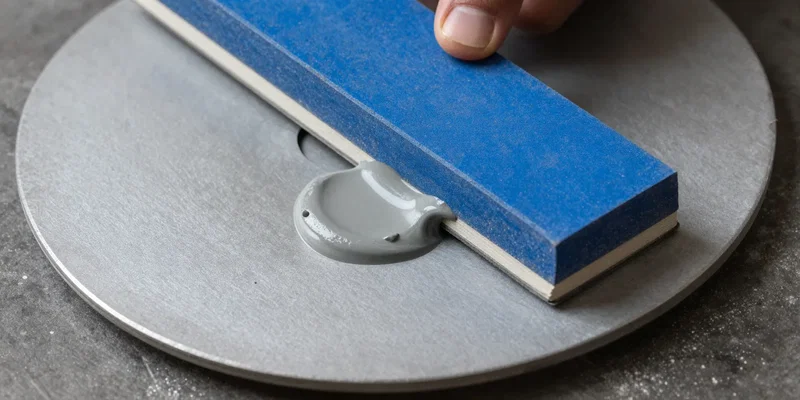
Let's talk about hidden costs. Water stones dish. Physics doesn't care about your budget. If you're not flattening regularly, you're sharpening on a curve. That means buying a flattening plate, or a diamond lapping plate, or getting really good at drawing grids with a pencil. More stuff. More maintenance. Diamond plates stay flat, but they can load up with swarf. You need to keep them clean. And here's the kicker. A cheap diamond plate saves money until you realize you still need something finer than 1000 grit to actually finish an edge. So you buy stones anyway. Or a strop. Or both. Rabbit hole.
Stop Being Pure. Hybrid Is Honest.
Most serious sharpeners I know run a hybrid setup. They'd never admit it on forums, though. Diamond plates for the grunt work. Repairing chips, reprofiling, grinding out damage. Then a quick jump to a synthetic water stone for refinement. Maybe 1000 grit, then 3000, then a strop loaded with compound. You get the speed of diamonds with the polish of stones. A pure diamond edge can be a bit too wild for kitchen prep. A pure water-stone edge on S110V takes so long you'll order takeout before you finish. Hybrid isn't cheating. It's honest.
The Plate Doesn't Matter If You Suck at Angles
Here's the thing. People obsess over diamond versus water stone when their angle is bouncing around like a pinball. A steady 15 degrees on a basic diamond plate will absolutely destroy a wobbly 12-to-20-degree disaster on a $300 natural stone. Wear-resistant steel punishes inconsistency. It doesn't care about your gear. It cares about time and pressure and geometry. So pick a system. Actually, pick whatever gets you to practice. The steel will yield. Eventually. It just wants to know you're serious.